Kawaii Art
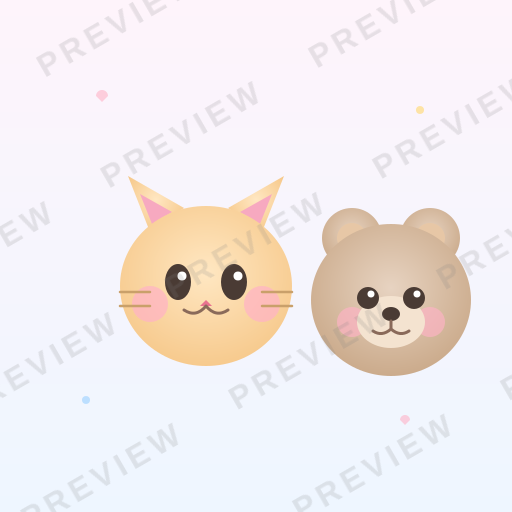
Cute Japanese-inspired characters with big eyes and soft features
How do you make Kawaii SVG art?
Describe any subject and pick the Kawaii style — Clearly generates a clean, editable vector in seconds, with Kawaii’s signature look (oversized heads/eyes, rounded, soft shapes, pastel-friendly colors), ready for Cricut, print, or the web. No design software needed; free to generate and preview, with commercial-license exports on a plan.
About Kawaii style
Kawaii (meaning "cute" in Japanese) brings adorable charm to any project. Characterized by rounded shapes, oversized heads, tiny bodies, and expressive dot eyes, this style creates instant emotional connection. Popular for stickers, children's products, and social media content.
History of Kawaii
Kawaii culture emerged from 1970s Japanese youth culture, though its visual language was pioneered earlier by illustrator Rune Naito, whose large-headed, baby-faced girls appeared in Japanese magazines throughout the 1950s–70s. Sanrio, founded in 1960 by Shintaro Tsuji, discovered that products with cute character designs outsold plain ones dramatically — leading to the creation of Hello Kitty in 1974, the definitive kawaii icon.
The 1980s saw the "marui ji" (round writing) trend, where Japanese schoolgirls deliberately wrote in rounded, childlike script. By the 1990s, kawaii had become inseparable from Harajuku street fashion — pastel colors, childlike maximalism, and character accessories. Pokémon's 1998 international launch delivered kawaii aesthetics to a global audience for the first time.
Artist Takashi Murakami's "Superflat" theory connected kawaii to contemporary fine art, arguing that the flatness and cuteness of Japanese pop culture was both a critique and a celebration of consumer society. Today, kawaii is a global design language used in everything from app interfaces to fashion to food packaging.
Key Kawaii artists
Rune Naito
Shintaro Tsuji (Sanrio)
Takashi Murakami
Hayao Miyazaki
Yuko Shimizu
Iconic Kawaii works
Hello Kitty (Sanrio, 1974)
Pikachu (Pokémon, 1996)
Totoro (Studio Ghibli, 1988)
Cinnamoroll (Sanrio)
Murakami, Mr. DOB character series
Cultural significance
Kawaii is far more than an aesthetic — it's a cultural philosophy that values vulnerability, approachability, and emotional connection through visual softness. From Tokyo's Harajuku district to global brands, kawaii has proven that "cute" is a universal language that transcends age, gender, and cultural boundaries.
Style characteristics
- Oversized heads/eyes
- Rounded, soft shapes
- Pastel-friendly colors
- Simple facial expressions
- Chibi proportions
Best for
- ✓Stickers
- ✓Children's products
- ✓Social media
- ✓Planner decorations
- ✓Merchandise
Create Kawaii art with AI
Describe your vision
Tell AI what you want in kawaii style.
AI generates
Get a unique kawaii SVG in seconds.
Download & use
Editable SVG for any project — commercial use on a paid plan.
Related art styles
If you like Kawaii, explore these similar styles.
Simple Kawaii
Round shapes with cute dot eyes and pastel color palettes
Kawaii Food
Adorable food items with cute faces, expressions, and personality
Kawaii Animals
Chibi-proportioned animals with oversized heads and adorable expressions
Sticker
Vibrant die-cut ready illustrations with bold outlines and clean edges
Children's Book
Soft, warm storybook illustrations with gentle colors and whimsical characters
Browse Illustration & Character styles
Explore all styles in this category, or browse the full Style Encyclopedia.
Simple Kawaii
Round shapes with cute dot eyes and pastel color palettes
Kawaii Food
Adorable food items with cute faces, expressions, and personality
Kawaii Animals
Chibi-proportioned animals with oversized heads and adorable expressions
Planner Doodles
Small cute icons and decorations designed for bullet journal layouts
Whimsical
Playful, fantastical designs with storybook charm
Sticker
Vibrant die-cut ready illustrations with bold outlines and clean edges
Children's Book
Soft, warm storybook illustrations with gentle colors and whimsical characters
Flat Design
Modern flat vectors with solid fills, no gradients, and clean geometry
Spot Illustration
Small focused micro-illustrations perfect for UI empty states and features
Fashion Illustration
Elongated figure proportions with couture elegance and editorial flair
Food & Drink
Appetizing culinary illustrations that make food look irresistible
Editorial
Bold conceptual compositions for magazines, blogs, and hero sections
Kawaii SVGs by category
Browse kawaii designs for a specific subject — each generated to order, then editable.
Kawaii Animals
Animals in kawaii style.
Kawaii Flowers
Flowers in kawaii style.
Kawaii Nature
Nature in kawaii style.
Kawaii Holidays
Holidays in kawaii style.
Kawaii Food & Drinks
Food & Drinks in kawaii style.
Kawaii Sea Life
Sea Life in kawaii style.
Kawaii Basic Shapes
Basic Shapes in kawaii style.
Kawaii Crafts & DIY
Crafts & DIY in kawaii style.
Kawaii Borders & Frames
Borders & Frames in kawaii style.
Frequently asked questions
01What is Kawaii art?+
02What are the key characteristics of Kawaii style?+
03Can I generate Kawaii SVGs with AI?+
04Who are the most famous Kawaii artists?+
05What are famous examples of Kawaii art?+
Ready-made
Ready-made Kawaii vectors
Hand-curated kawaii SVGs, licensable now — $<OneTimePrice /> once, commercial use, no subscription.


Create Kawaii art today
Generate unique kawaii SVG designs with AI. Preview free, no design skills needed — $<OneTimePrice /> once for a commercially-licensed SVG, no subscription.